Outlook
A pilot plan for payroll research tools before any subscription
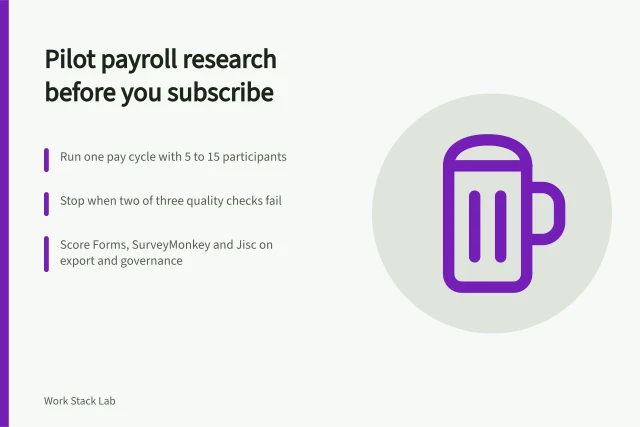
A pilot plan for payroll research tools: sample, question set, consent wording, stop rule, scoring table, and how Microsoft Forms, SurveyMonkey and Jisc compare.

Archive
Outlook
A pilot plan for payroll research tools: sample, question set, consent wording, stop rule, scoring table, and how Microsoft Forms, SurveyMonkey and Jisc compare.
Outlook
How to wire a branch feedback form into an SOP library so responses trigger versioned revisions, plus audit trails, field mapping and UK data protection duties.
Tools and providers
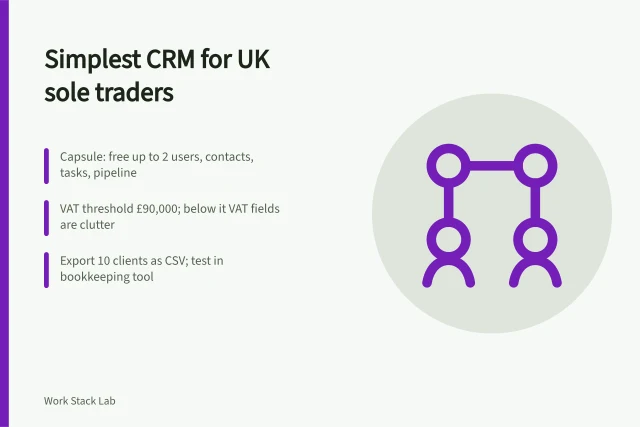
Compare simple CRM options for UK sole traders, naming Capsule, Less Annoying CRM, HubSpot, Zoho, Pipedrive and Streak, and pick the simplest for one person.
Tools and providers
How to judge project management tools against UK GDPR, the Data Protection Act 2018 and ICO guidance on transfers, residency and processor terms.
Reviews
UK retailers comparing inventory software need EPOS links, VAT ready records and warehouse fit. Here are five named options with public facts to check before a demo.
Operations
How UK small businesses can automate invoices, keep digital records for Making Tax Digital and cut the admin hours spent on VAT coding and chasing payment.
Tools and providers
A head-to-head verdict on Microsoft 365 and Google Workspace for UK SMEs, with GBP list prices, UK data regions, residency exclusions and UK GDPR duties.
Tools and providers
A UK guide to open source productivity software, covering Nextcloud hosting, self-hosted CRM options, UK GDPR duties and how to compare providers.
Tools and providers
Asana vs ClickUp for UK remote teams: real tiers, per-seat prices, named data regions, sub-processor lists and a feature-by-feature comparison.
Operations
How UK franchise networks standardise operations with SOP software: version control, pilot rollouts, site access and data protection duties, step by step.
Tools and providers
Choosing time tracking software as a UK freelancer: compare Toggl Track, Clockify, Harvest and FreeAgent for IR35, GBP billing, VAT, bank holidays, data protection.
Tools and providers
Compare Zapier, Make and n8n for UK SMEs on billing units, typical GBP entry tiers, Xero and Sage connectors and data protection before you commit.
Tools and providers
Compare Microsoft Forms, Google Forms and a manual baseline for England research using common evidence, privacy, access, export and exit fields.
Outlook
Five evidence-led productivity software trends to monitor through September 2027, with UK sources, limitations and practical review triggers.
Rules and ethics
Check productivity software advertising for clear commercial intent, evidence, fair comparisons, accurate prices, testimonials and lawful outreach.
Reviews
Assess productivity software agencies through identity, scope, delivery and evidence checks, illustrated with a disclosed UK desk-research dossier.
Outlook
Map practical AI applications in productivity software, then set permissions, evidence and human checks before enabling actions in an English organisation.
Measurement
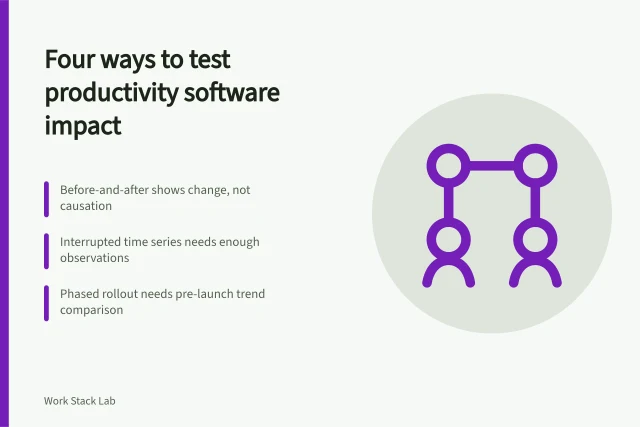
Compare four ways to assess whether productivity software contributed to change, using consistent criteria for evidence strength, data, assumptions and cost.
Audience research
Plan audience research for productivity software in England, from recruitment and interviews to surveys, privacy controls and evidence-led decisions.
Measurement
Research productivity software benchmarks without false precision by testing definitions, populations, periods, geography, methods, uncertainty and sponsorship.
Reviews
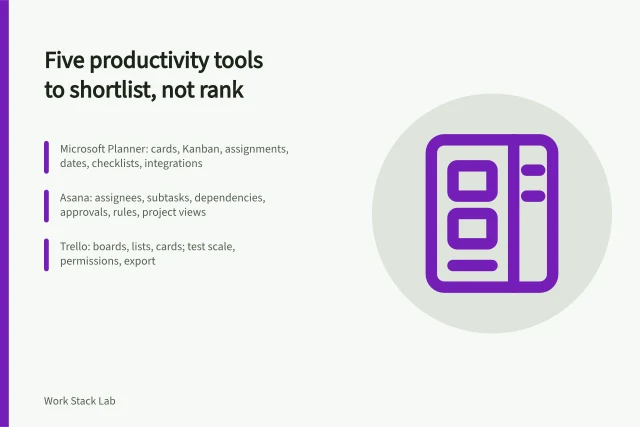
A non-ranked, evidence-led shortlist of five productivity software records, with workflow fit questions, research limits and practical trial steps.
Tools and providers
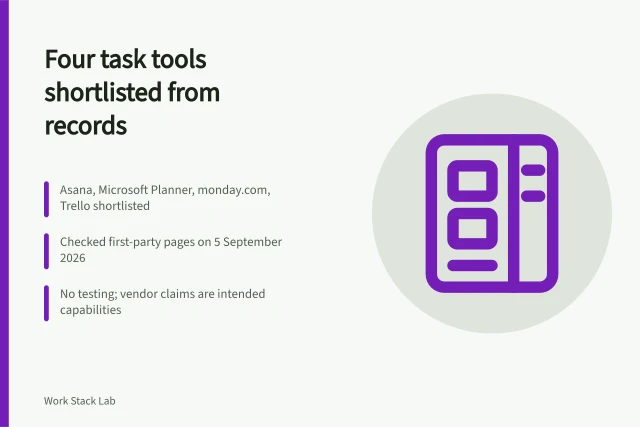
A non-ranked shortlist of four productivity tools, based on first-party task-management records and a clear desk-research method for buyers in England.
Costs and pricing
Build a transparent software budget with units, quantities, tax, timing, evidence, owners and uncertainty across setup, operation, renewal and exit.
Foundations
Compare subscription, managed and self-hosted productivity software models on cost units, responsibility, implementation, security and exit terms.
Audience research
A research method for building business software buyer personas and profiles that record authority, decisions, evidence needs and participant protection.
Strategy
Compare direct, partner and public-sector routes for productivity software using consistent evidence, legal checks and channel-specific limits.
Rules and ethics
Review seven contract areas before buying productivity software, including scope, implementation, data, security, changes, liability and a workable exit.
Foundations
Find defensible productivity software opportunities in England through workflow depth, implementation support, assurance, integration and responsible adoption.
Audience research
Research productivity software competitors through verified entities, product records, pricing units, buyer evidence and credible alternatives in England.
Costs and pricing
Map the full cost of productivity software across purchase, implementation, operation, renewal and exit, with clear VAT and evidence assumptions.
Costs and pricing
Build a realistic productivity software budget for an England-based organisation, covering billing units, VAT, staff effort, risk, renewal and exit.
Audience research
Use eight neutral interview questions to examine real productivity workflows, buying authority, adoption barriers and evidence needs in English firms.
Rules and ethics
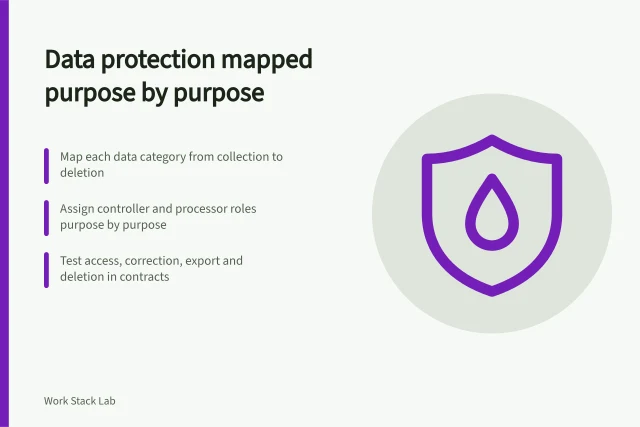
Plan data protection for productivity software by defining roles and purposes, limiting collection, screening risk and matching contracts to the service.
Foundations
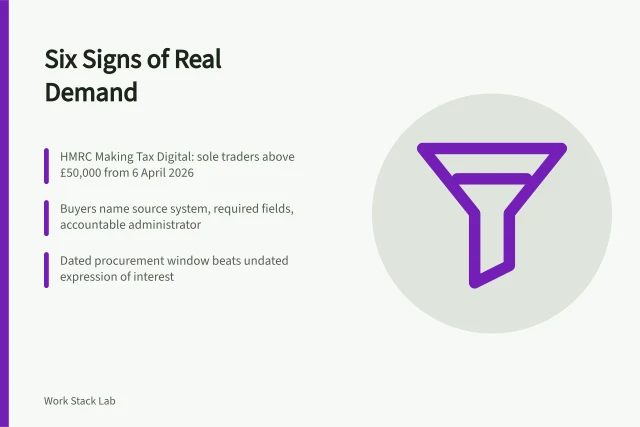
Use six observable demand signals to test an England productivity software idea, while keeping UK surveys, regulation and customer behaviour in context.
Rules and ethics
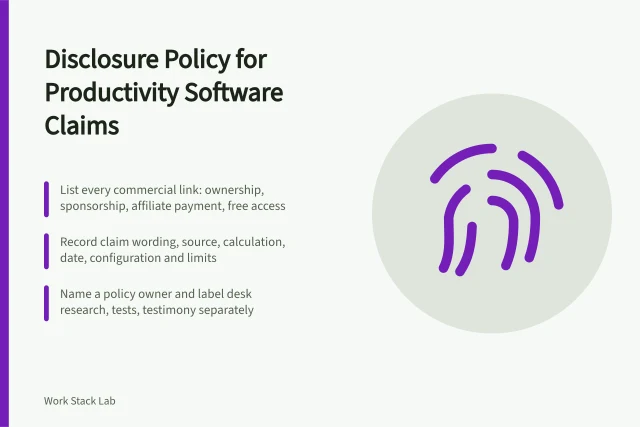
Write a disclosure policy for productivity software content, covering commercial interests, evidence limits, reviews, automation and security reporting.
Foundations
Assess England's business productivity software market through buyer workflows, reliable demand evidence, delivery models and procurement checks.
Costs and pricing
Seven commonly missed software cost areas, each tied to an authoritative billing, tax, security, consultation or exit record for England-based buyers.
Measurement
Define a compact set of productivity software measures for demand, delay, flow, quality, use and outcomes without inventing targets or causal claims.
Operations
A disclosed desk review of Microsoft Planner's public launch evidence, showing what an England-based buyer can verify and what still needs controlled testing.
Foundations
Use this England market-entry checklist to test a software proposition, form the business, map data duties, prepare assurance and plan customer exit.
Outlook
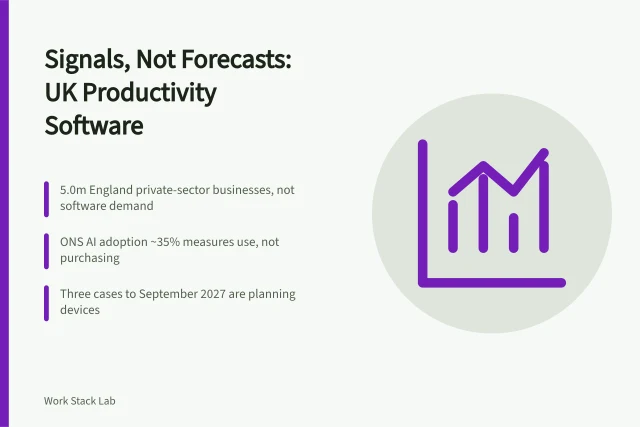
Build a cautious productivity software market outlook from UK adoption, investment and policy signals without turning them into invented revenue forecasts.
Foundations
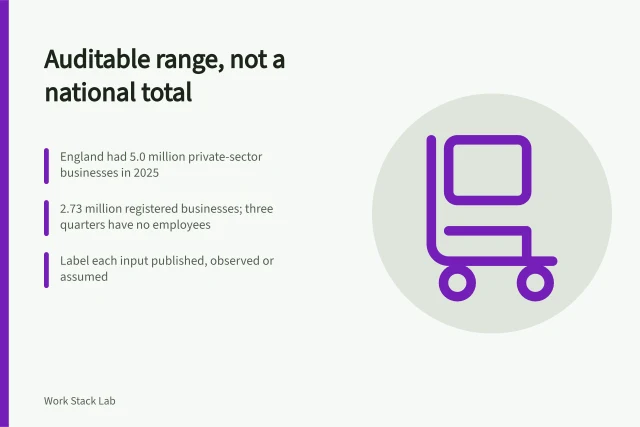
Estimate England's addressable productivity software market without misusing broad business counts, mixed survey populations or unsupported revenue figures.
Measurement
Measure productivity software with defined flow, quality and outcome indicators, honest attribution, reproducible reporting and comparable evidence.
Measurement
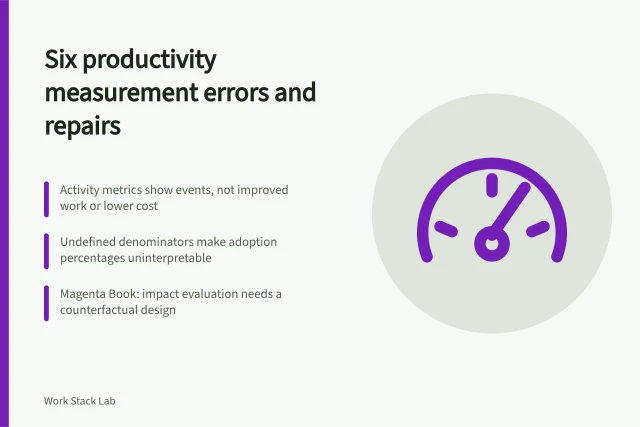
Six common productivity software measurement errors, with authoritative UK evidence and practical repairs for definitions, data, causality, privacy and benchmarks.
Strategy
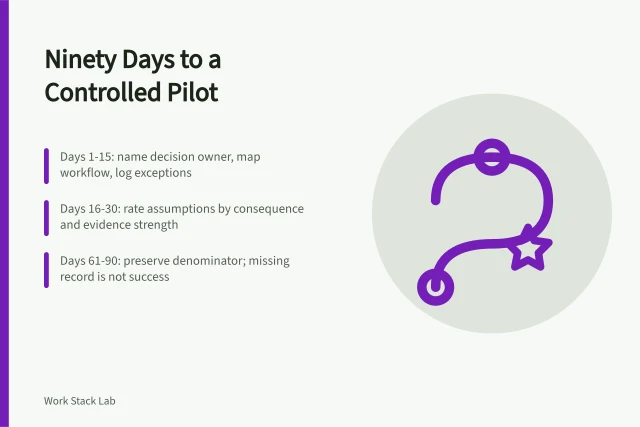
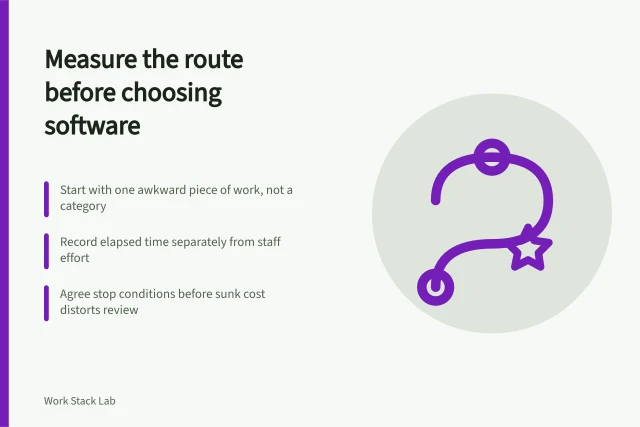
Plan the first 90 days of a productivity software proposition through discovery, risk tests, a controlled pilot and a careful evidence-led review.
Operations
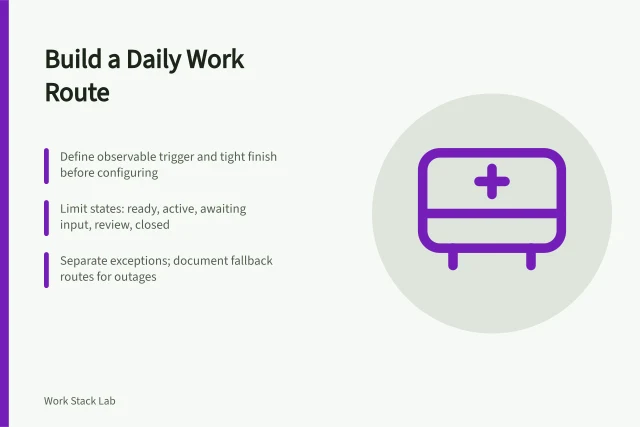
Turn a configured productivity platform into a workable daily route, from complete intake and triage through ownership, exceptions, evidence and closure.
Operations
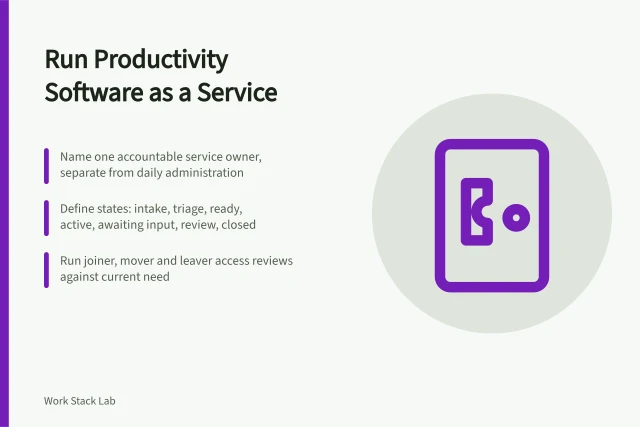
Run productivity software as a dependable service, with clear workflow ownership, quality controls, access routines, incident plans and useful measures.
Strategy
Copy this productivity software planning template to record scope, evidence, dependencies, decision gates and ownership without inventing forecasts.
Costs and pricing
Compare seat, active-user, workspace and tiered pricing models through dated first-party billing rules, common units and explicit research limitations.
Reviews
Compare Microsoft Planner, Asana and Trello on one shared workflow, plus Jira, ClickUp and Smartsheet public facts on permissions, exceptions and export for UK teams
Operations
Check a productivity workflow before launch and after material changes, covering real tasks, access, data, integrations, exceptions, recovery and evidence.
Measurement
Build a decision-led productivity dashboard with versioned definitions, tested data, accessible charts, clear refresh dates, annotations and drill-down evidence.
Costs and pricing
Estimate software return without turning time saved into fictional cash: define the baseline, benefit route, ownership cost, uncertainty and review test.
Reviews
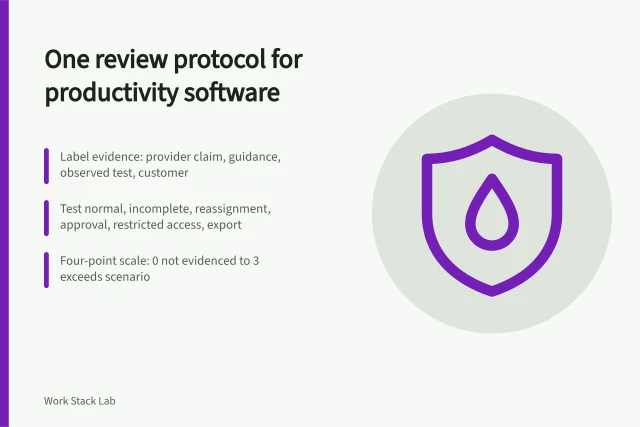
How to run a desk review protocol for productivity software, labelling evidence, separating gates from scores and recording unresolved questions.
Reviews
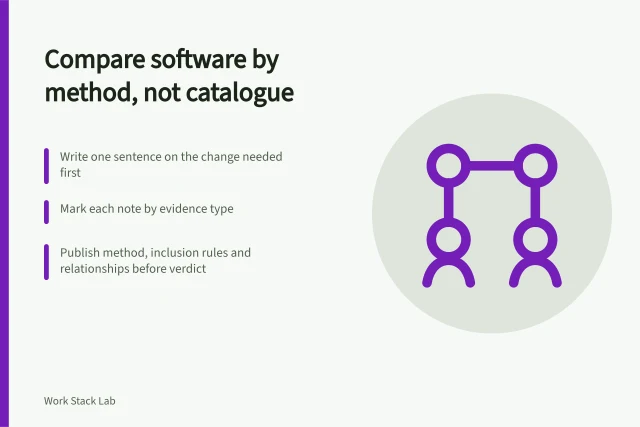
A method for comparing eight named productivity tools, covering evidence types, a test script, admin and export checks and commercial questions before a verdict.
Outlook
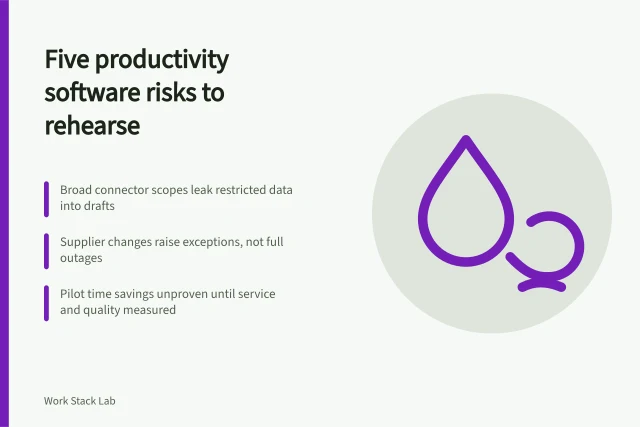
Rehearse five productivity software risk scenarios with concrete triggers, controls and recovery actions for organisations operating in England.
Reviews
Use this productivity software selection checklist to test workflow fit, security, data terms, full cost, administration and a credible exit.
Operations
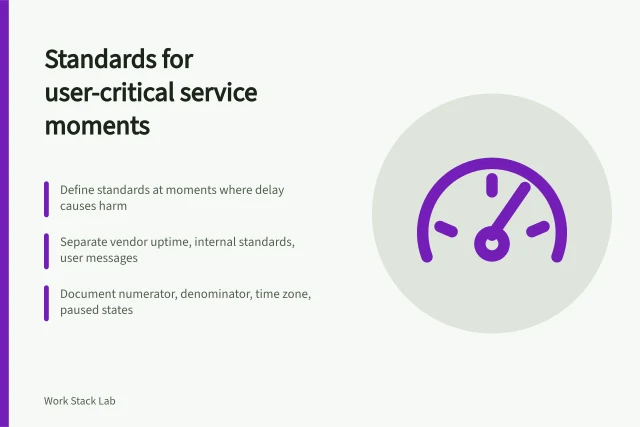
Define practical productivity service standards for intake, ownership, access, support, recovery and change without borrowing unsupported universal targets.
Outlook
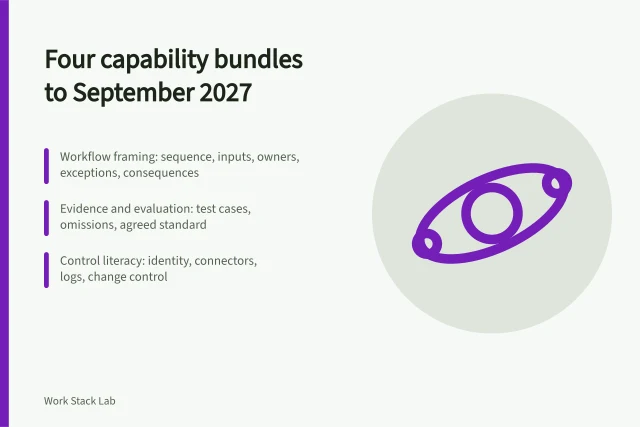
An England-specific AI skills scenario with four capability bundles, labour-market boundaries, role examples and a checklist for planning learning by September 2027.
Tools and providers
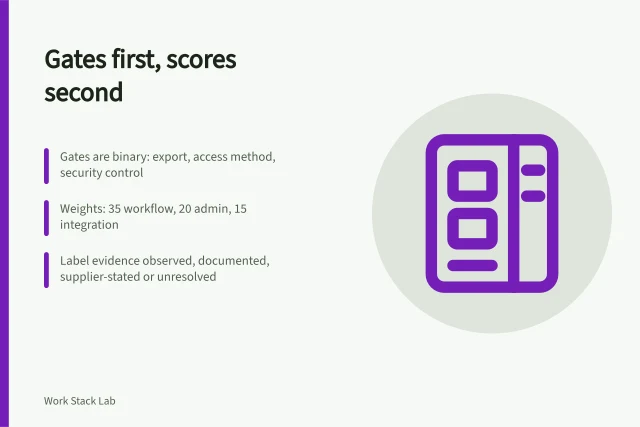
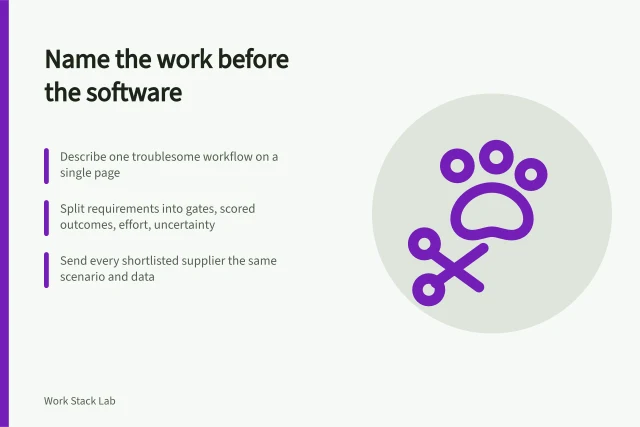
Select productivity software with hard gates, weighted workflow tests and an evidence log that keeps supplier claims separate from buyer observations.
Strategy
Create a practical productivity software strategy for an English business, with evidence gates, channel choices, risk controls and a usable roadmap.
Strategy
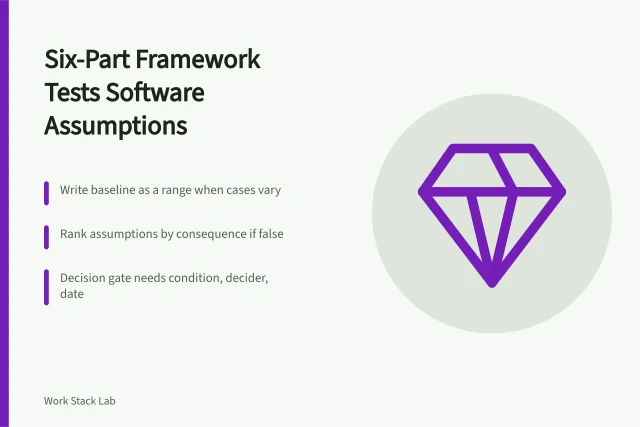
Use a six-part strategy framework to test a productivity software proposition, expose weak assumptions and make an evidence-based next decision.
Strategy
Avoid seven productivity software strategy mistakes involving scope, evidence, roadmaps, channels, security, reviews and unsupported benefit claims.
Tools and providers
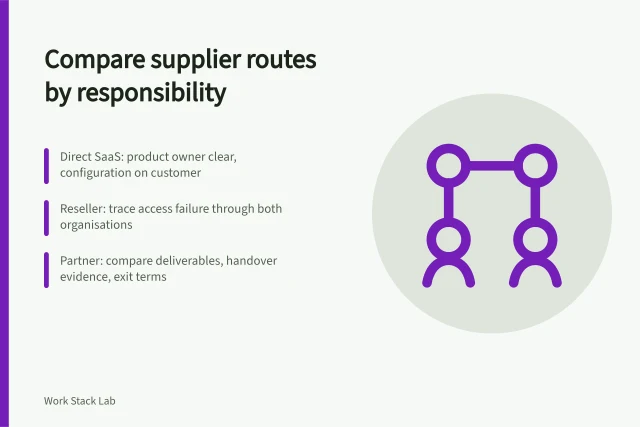
Compare direct vendors, resellers, managed providers and implementation partners using consistent responsibility, evidence, cost, support and exit tests.
Audience research
Compare Microsoft Forms, Google Forms and Jisc Online Surveys for business research by question design, response access, export and governance.
Audience research
Define a productivity software audience in England using workflow, business type, buying authority and recruitment evidence instead of broad labels.
Operations
Six evidence-backed ownership functions for running productivity software, with clear boundaries for accountability, workflow, access, quality and response.
Tools and providers
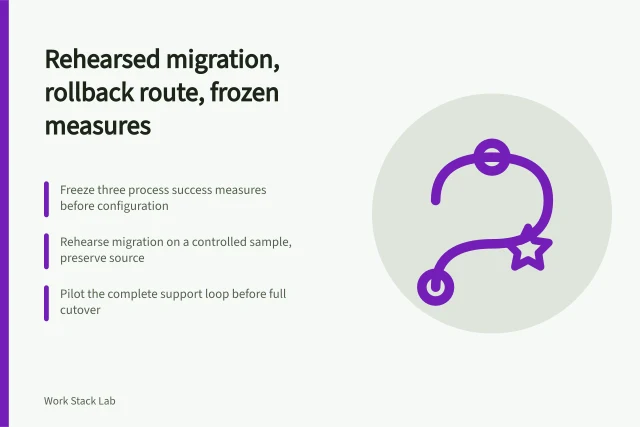
Implement productivity software through consultation, controlled configuration, reconciled migration, a bounded pilot, support readiness and a clear rollback route.
Tools and providers
Choose productivity software and suppliers for an England-based organisation with a practical route through needs, evidence, trials, contracts and exit.
Outlook
Assess productivity software changes with dated UK evidence, bounded scenarios and practical review triggers for organisations operating in England.
Rules and ethics
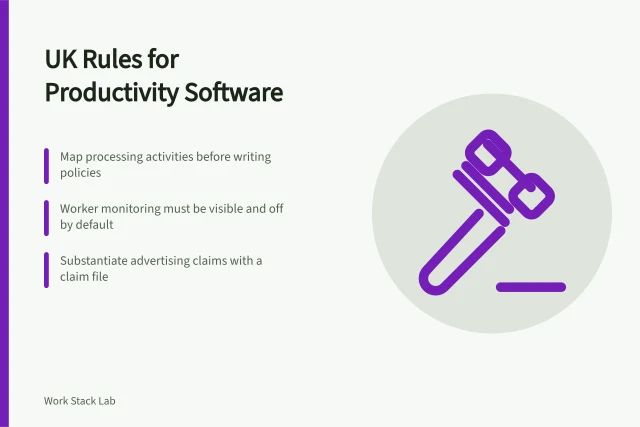
Identify which UK rules may affect productivity software used in England by mapping data, monitoring, marketing, customer type and security claims.
Rules and ethics
Map the UK rules and ethical checks for productivity software sold in England, covering data, worker monitoring, advertising, contracts and security.
Tools and providers
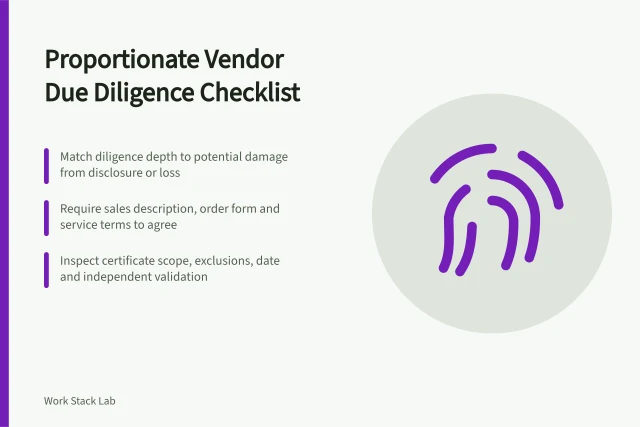
A proportionate vendor due-diligence checklist for productivity software, covering identity, service scope, privacy, security, resilience, support and exit.
Tools and providers
Business productivity and operations software teams often need a form tool. Compare Google Forms and Microsoft Forms on access, export and data governance.